

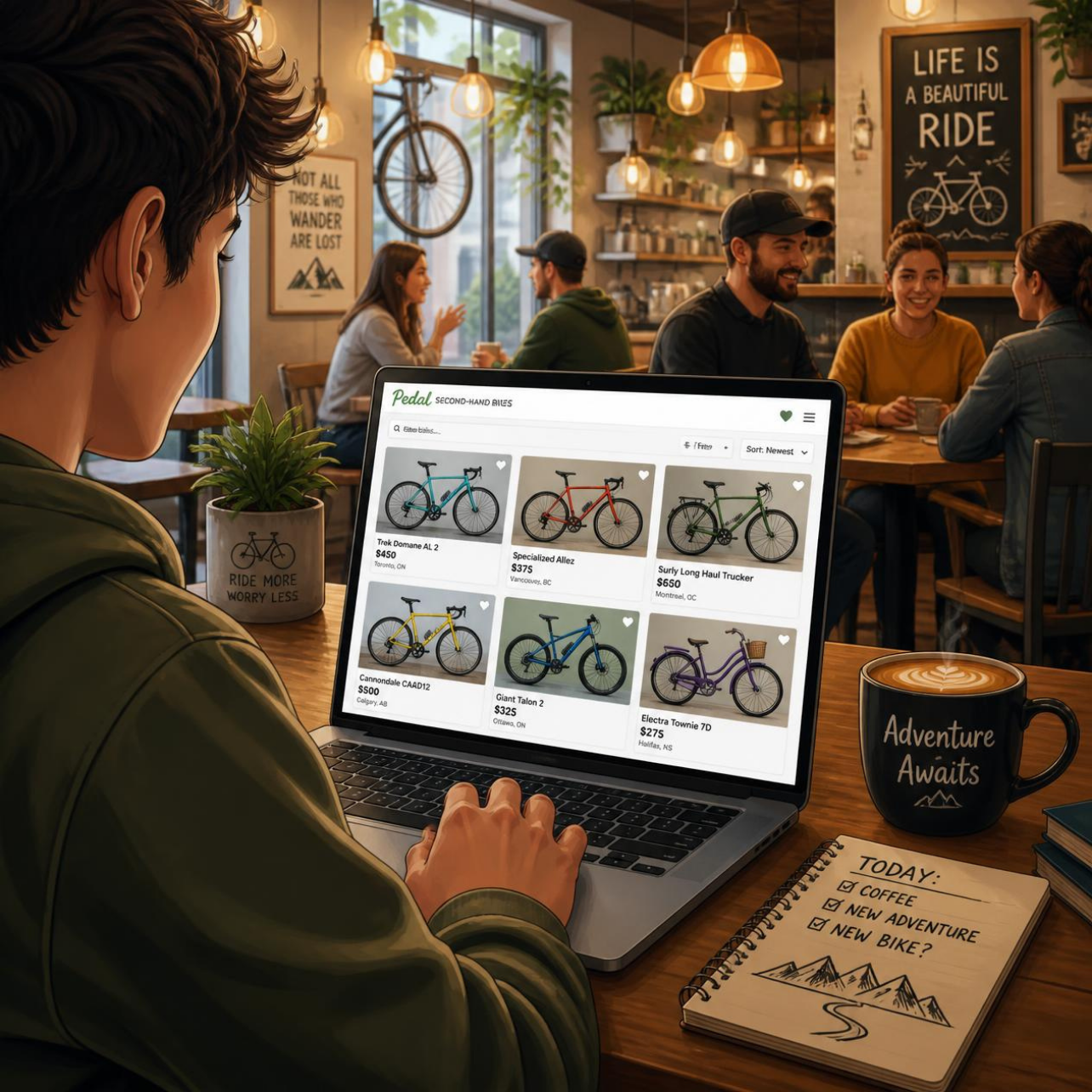
Checklist for buying a second-hand bike
When buying a second-hand carbon bicycle, the biggest priority is making sure there isn’t hidden structural damage. Carbon can look perfectly fine externally while having damage underneath.
1. Inspect the frame carefully
Look closely at:
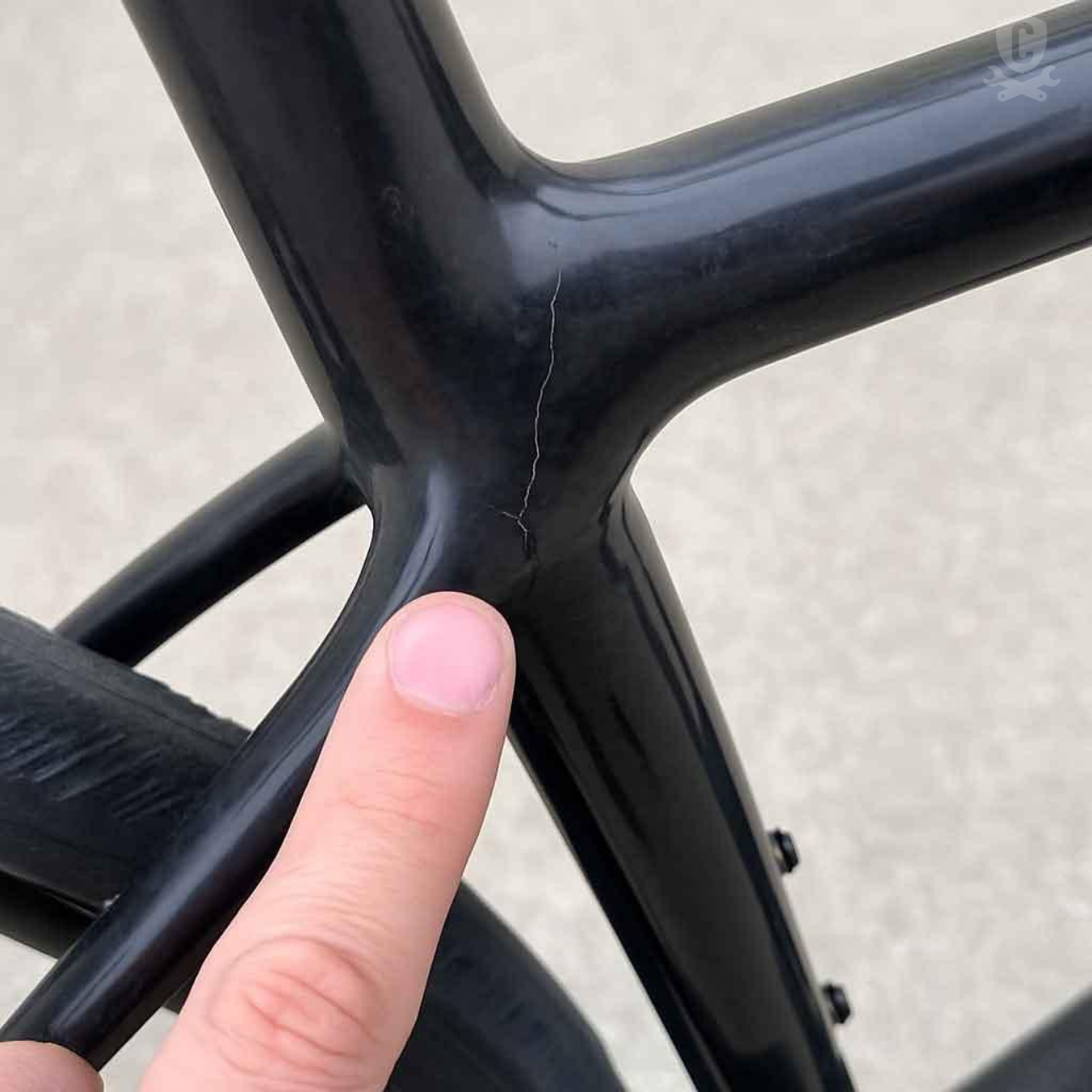
- Head tube and fork crown – check for cracks, chips or impact marks.
- Top tube and down tube – especially underneath and around bottle-cage mounts.
- Bottom bracket area – look for cracks, dents, compression marks or damaged inserts.
- Chain stays and seat stays – inspect around the dropout and wheel contact areas.
- Seat tube/seat clamp area – check carefully for cracks caused by over-tightening.
- Dropouts – look for cracks or damage around the axle and derailleur hanger.
- Cable-entry points and internal routing holes – these can be stress points.
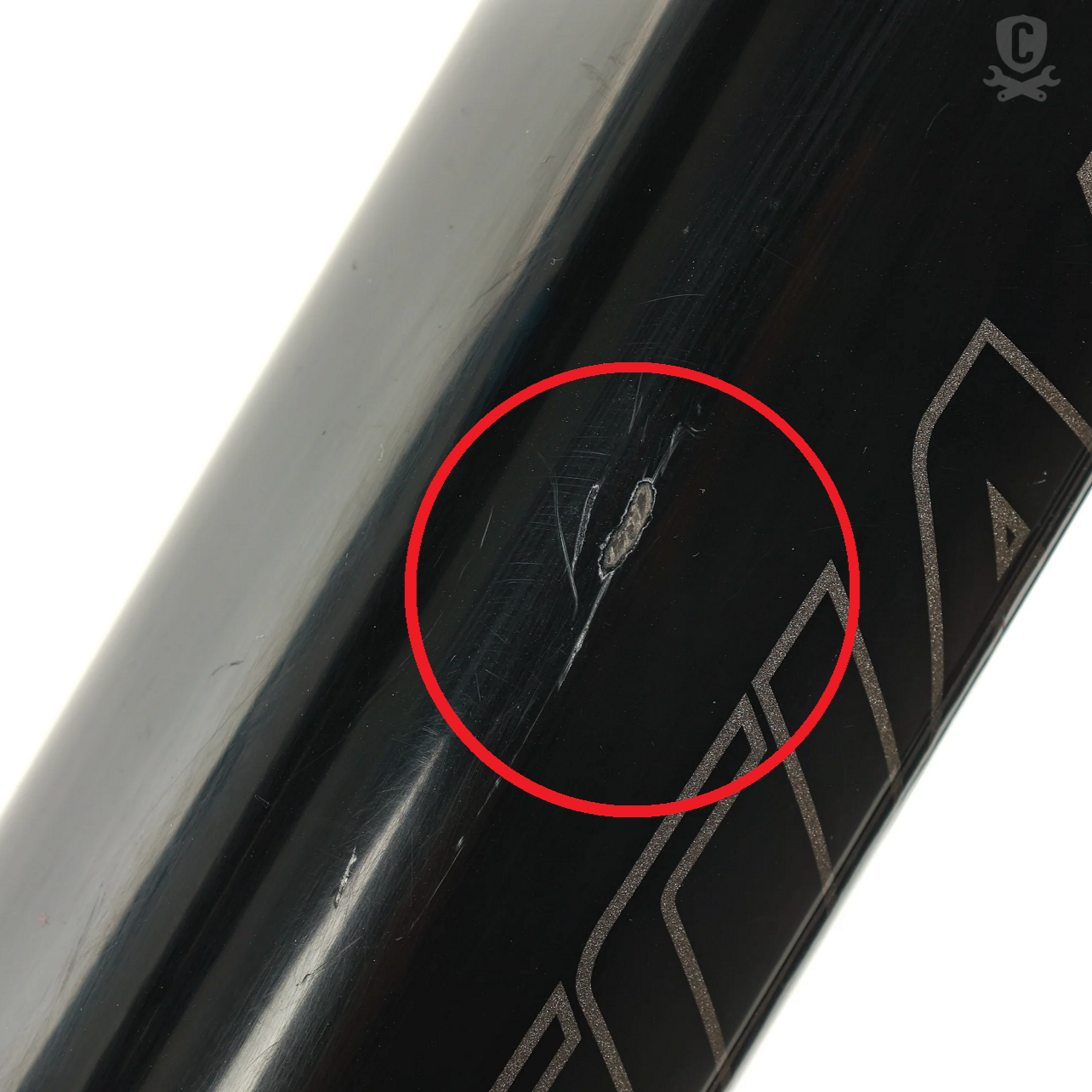
- Any area with a deep scratch – don’t assume it’s cosmetic until you’ve established how deep it is.
Run a clean finger over suspicious areas (watch out for splinters!). Changes in texture, raised edges, soft spots, unusual depressions or sharp transitions can be more significant than a superficial scratch
2. Look for signs of an accident
Ask the seller directly:
- Has it been involved in an accident or incident?
- Has anything been replaced following an accident?
- Has the frame ever been repaired?
- Has the bike ever had a carbon repair?
- Why are they selling it?
Be particularly cautious if the seller says “I’ve never crashed it” but there are fresh-looking marks on the bars, saddle, pedals, derailleur or brake levers.
3. Check the components
Carbon frame damage isn’t the only concern, make sure to check:
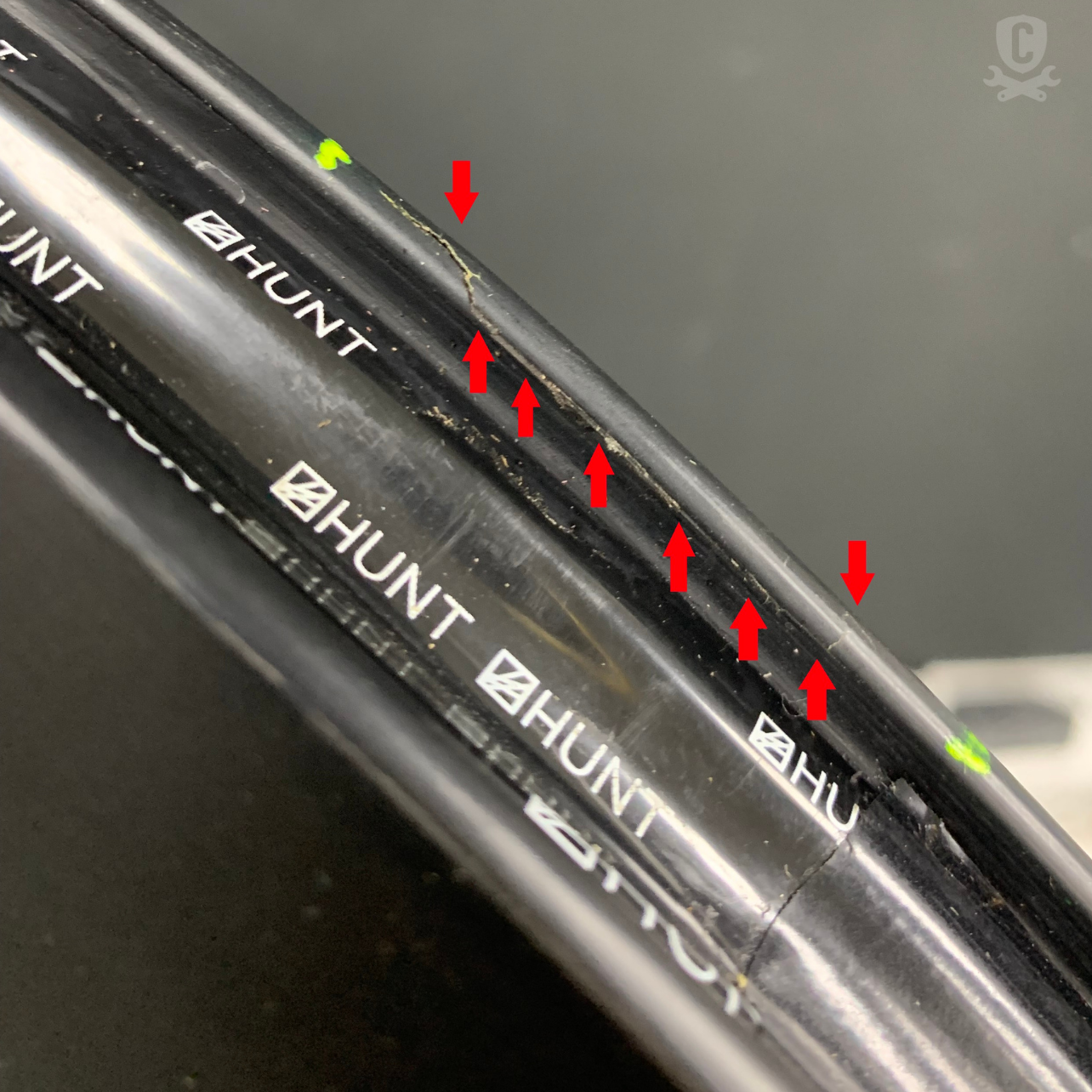
- Wheels for cracks, curb abrasion and spin it in your hand to check for true.
- Handlebars, particularly around the stem and bar/stem clamp. If you can remove the bar tape.
- Seatpost for cracks or crushing at the clamp point.
- Crank arms and chainrings.
- Derailleur and derailleur hanger.
- Brake calipers/discs.
- Headset for play. Rock the front forks back and forth. This can be steerer wear.
- Bottom bracket for looseness or gritty bearings
- Hubs and bearings.
Carbon handlebars deserve particular attention after any impact, because damage around the stem or controls can be difficult to see.
4. Check how it has been maintained
Ask whether the seller has:
- Torque-wrenched carbon components
- Followed the manufacturer’s torque settings.
- Used carbon assembly paste where appropriate.
- Had the bike serviced professionally.
- Replaced bearings/cables/chains recently.
Over-tightening is particularly relevant around seat clamps, stems, handlebars and bottle-cage mounts.
5. Verify the Bike’s History
We strongly recommend getting:
- Original purchase receipt/proof of purchase
- Frame serial number.
- Review the bike spec online and compare before buying.
- Service records.
- Carbon repair documentation, if applicable.
- Warranty information.
- Confirmation that the seller actually owns the bike.
For an expensive bike, check whether the manufacturer’s warranty is transferable.
6. Check Wheels Separately
Don’t assume that because the wheels spin and hold tension they’re structurally sound.
Look for:
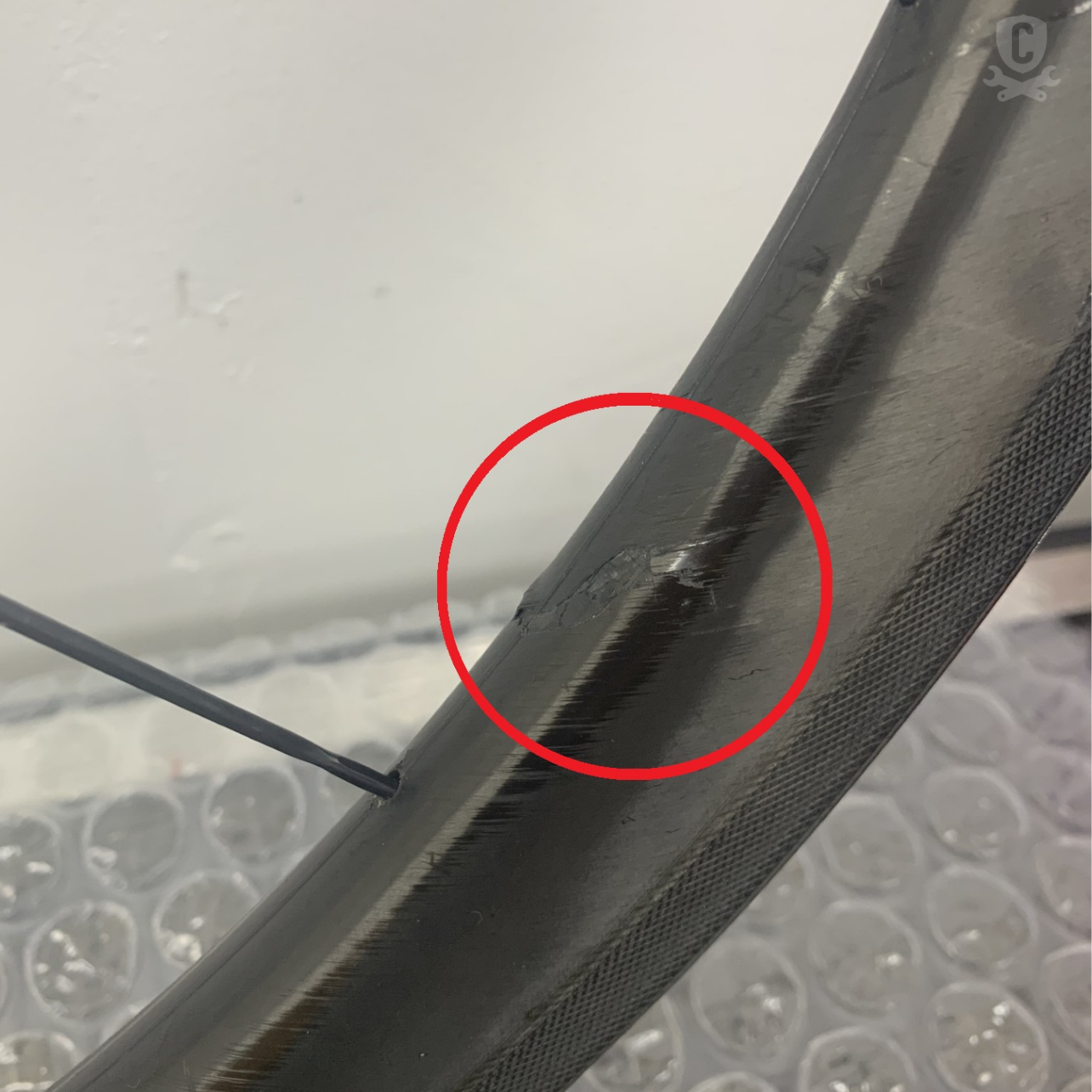
- Cracks around spoke holes.
- Cracks to the rim fairing.
- Impact marks.
- Damaged rim edges.
- Uneven spoke tension.
- Bent spokes or spoke nipples pulled through the carbon rim
- Wheel run-out.
A carbon wheel can still tension correctly despite having structural damage, so correct spoke tension alone doesn’t prove that a damaged wheel is safe.
7. Consider a Professional Inspection
For an expensive carbon bike, this is probably the best money you’ll spend before buying.
Ideally, have a reputable carbon specialist inspect:
Frame + fork + seat post + handlebars + wheels
If there is suspicious damage, ask whether they can carry out an appropriate non-destructive inspection. Not every carbon component can be reliably assessed using the same scanning method, so the inspection method should be appropriate to the construction of the particular component.
8. Don’t let a cheap thing override warning signs
Walk away if:
- The seller refuses an inspection.
- There is unexplained damage.
- The serial number has been removed/altered.
- There is no credible ownership history.
- The seller provides inconsistent explanations.
- The bike has obvious crash damage but the seller says it’s “only cosmetic”.
- You’re being pressured to pay immediately.
Rule of thumb: if you’re spending money on a second-hand carbon bike, budget for a professional inspection if you are not completely satisfied with the above points, particularly if you cannot establish the bike’s accident and repair history.
~ Written by Tanita McCann
~ Edited By Rob Granville
 English (UK)
  Français